Detailed search
RELATED pages


Workshop on the EURATOM Nuclear Safeguards System Held at the HAEA
2026.10.02
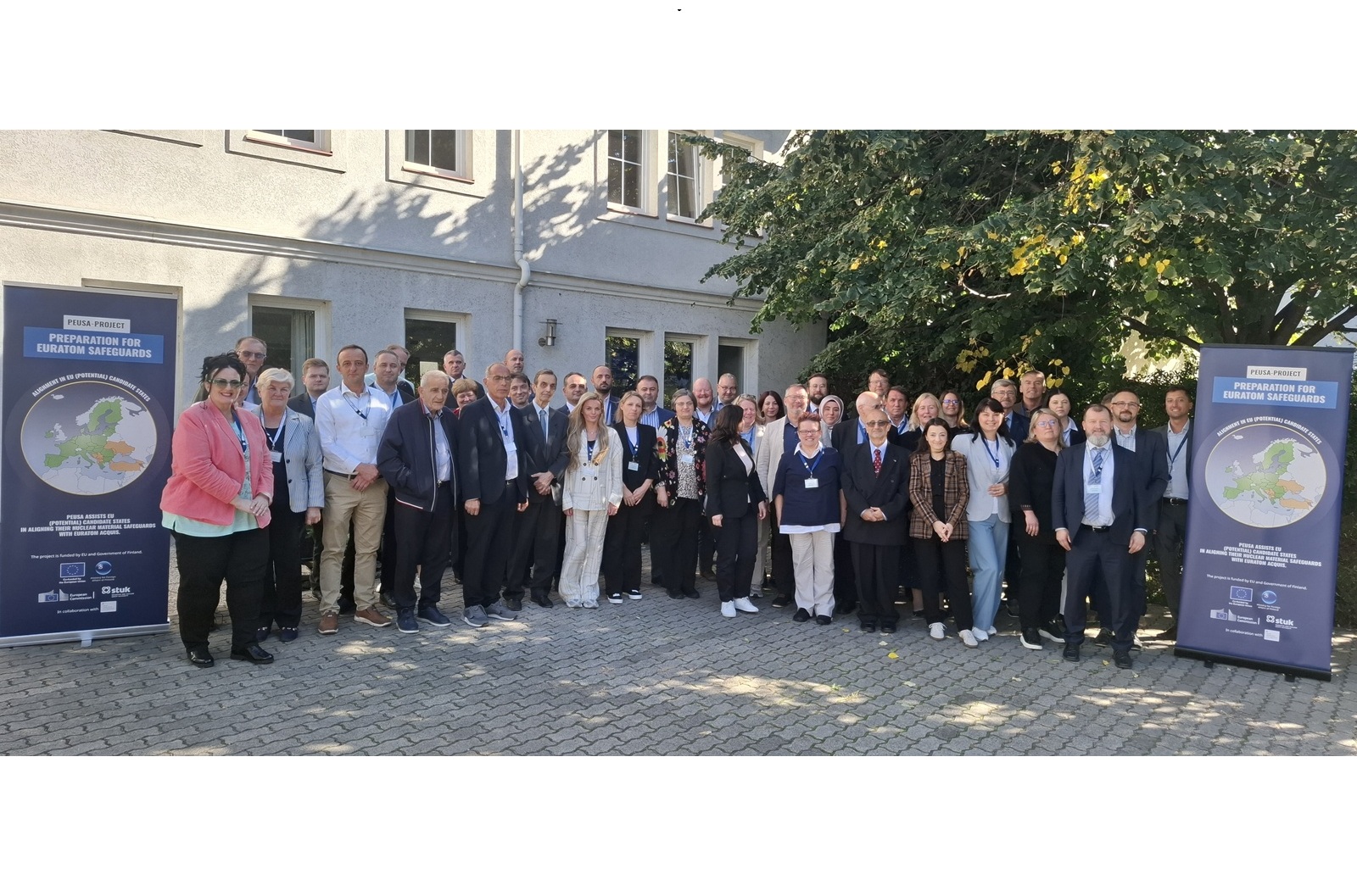
The Hungarian Atomic Energy Authority (HAEA) hosted a workshop on the EURATOM nuclear safeguards system and its implementation from 28 September to 2 October 2026. The event hosted by the HAEA and led by the Finnish nuclear authority (STUK). Representatives of the nuclear safeguards authorities of ten partner countries – Albania, Armenia, Bosnia and Herzegovina, Kosovo, Moldova, Montenegro, North Macedonia, Serbia, Türkiye and Ukraine – as well as organisations involved in the implementation of the project and invited experts participated in the workshop.
Through a series of presentations, the participants reviewed the legal, institutional and practical framework of the EURATOM nuclear safeguards system, as well as the tasks and challenges the countries preparing for EU accession facing. The technical presentations were complemented by panel discussions and interactive group sessions, during which participants shared their national experiences and discussed further practical issues related to the development of national nuclear safeguards systems. The workshop also included an exercise aimed at managing a fictitious event within the field of nuclear safeguards.
At the conclusion of the workshop, the partner countries presented their development roadmaps for their national nuclear safeguards systems, focusing on further capacity-building and preparedness activities. The participants also identified areas where additional support should be provided under this project, the PEUSA project.
What is the nuclear safeguards system?
The nuclear safeguards system is an international verification and monitoring mechanism designed to ensure that nuclear materials and facilities are used exclusively for peaceful purposes and to prevent their diversion to military use. The international nuclear safeguards system was established by the International Atomic Energy Agency (IAEA), while in Hungary it is overseen by the HAEA.


 ©HAEA - All rights reserved